The two invited speakers of the workshop are Anne Hermes and Stefano Coretta. You can find their short bio and the short abstract of their talks below.
Anne Hermes
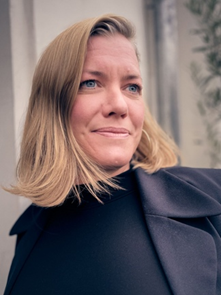
Short biography
Anne Hermes is a CNRS researcher at the Laboratoire de Phonétique et Phonologie (LPP) in Paris. She completed her PhD in 2013 at the University of Cologne. Her research combines theory construction for linguistic phenomena with experimental explorations of speech production in different languages and populations. It lies in the area of Laboratory Phonology with the goal to understand variation in speech and how it relates to phonological organization. To achieve this goal, she considers different factors of variation, such as linguistically-related (prosodic constituents), disease-related (speech motor disorders) and biologically-related (aging) factors. Her research focuses on modeling coordinative structures in a non-linear dynamic system, aiming to represent not only continuous but also discrete phenomena in speech and, going a step further, to understand variation as part of the phonological systems of human languages.
Coordinative structures in speech: Linguistic, age-, and disease-related factors
This talk explores speech coordination through three interconnected domains. First, it examines how linguistic structures manifest in speech coordination patterns. Specifically, I will demonstrate how syllable structure is reflected in articulatory coordination. The second domain addresses biological factors affecting speech coordination, with particular emphasis on age-related changes across different subsystems (i.e., articulation and speech breathing). The primary focus examines the effects of aging on speech motor control across different speech tasks, such as diadochokinesis (DDK), sentence production, and text reading. The final domain investigates disease-related effects on coordination, specifically in individuals with complete facial paralysis (Moebius syndrome). This condition presents unique challenges for speech production due to the inability to use the lips effectively. Despite these limitations, individuals with Moebius syndrome often achieve intelligible speech through compensatory articulatory strategies. The talk concludes with a discussion of future research directions and potential clinical applications of these findings.
Stefano Coretta

Short biography
I am a Lecturer (= Assistant Professor) in the Linguistics and English Language
department of the University of Edinburgh (UK). I take care of the quantitative
methods and statistics provision in the department, by developing and delivering a series of courses and workshops. My main research expertise spans different areas of phonetology (phonology, phonetics and speech), both from a synchronic and diachronic perspective. I also work on other areas within linguistics, like language description and biolinguistic diversity. I am a strong advocate of Open Research practices for a more transparent, well-grounded and reflexive scholarship, with a special interest in Bayesian approaches to quantitative methods. Positionality: I am a neurodiverse chronically-ill academic of mediterranean ethnicity. I was born and raised in Italy, but I have been living in the United Kingdom for a decade and I think of this country as my home. My philosophical stance is based on a syncretic synthesis of holistic monism, anti-realism, idealism, panpsychism and Bayesian epistemology. I reject positivism and its degenerate development, scientism. I am a practicing pagan with a strong natural and elemental basis.
Converging models of phonetology: a preliminary synthesis of the Life Cycle, XT/3C model and the Language Network
From an epistemological perspective, the study of human speech is traditionally
thought as the objective of different sub-disciplines, like phonetics, phonology,
and neuroscience. However, different ontological models of “human speech” are
adopted by different researchers (even within the same sub-discipline). I propose
the term “phonetology” to indicate both an overarching discipline which investigates human speech and signing, and the ontological entity which is the subject of such discipline. This approach enables us to talk about the ontological entity “phonetology” or “phonetological system”. Different models of phonetology are currently employed in the phonetological literature, but three promising ones are the Life Cycle, XT/3C model and the Language Network. In this talk I will provide an overview of each model and discuss how these models, each coming from a different “traditional” sub-discipline, can in principle be conceptually synthesised into a unified and coherent model of phonetology.